As businesses increasingly rely on digital tools to manage customers, invoices, and payments, protecting business operations from fraud has become more important than ever.
Whether you run a small business, manage a growing service company, or work independently, you need to know that the people you do business with are who they claim to be. Identity verification is no longer just something large financial institutions need to worry about. It is an essential part of running a trustworthy and secure business.
Why Identity Verification Matters
Every business interaction involves a degree of trust. You trust that a customer provides accurate information, that a payment comes from an authorized source, and that requests to change account details are legitimate.
Unfortunately, fraudsters increasingly exploit this trust.
Common examples include:
- Fake customer identities: Individuals use false or stolen personal information to create accounts or request services.
- Payment fraud: Stolen credit cards or unauthorized payment methods are used to pay invoices.
- Account takeover: Fraudsters gain access to legitimate customer accounts and misuse stored information or payment methods.
- Invoice fraud: Scammers impersonate customers, vendors, or business representatives to redirect payments.
- Unauthorized account changes: Fraudsters attempt to change email addresses, phone numbers, or payment details to gain control of an account.
Even a single fraudulent transaction can result in financial losses, administrative overhead, chargebacks, and damage to customer relationships.
Identity Verification Is the First Line of Defense
Identity verification helps businesses establish confidence in the people accessing their services and conducting transactions.
Depending on the nature of the business and the level of risk, verification can include:
- Email address verification.
- Phone number verification using one-time codes.
- Multi-factor authentication (MFA).
- Payment method verification.
- Verification of business and customer information.
- Additional identity checks for suspicious or high-risk activities.
Not every customer interaction requires the same level of verification. The goal is to introduce appropriate security measures without making the customer experience unnecessarily complicated.
Fraud Prevention Goes Beyond Identity Verification
Verifying someone’s identity is important, but it is only one part of a comprehensive fraud prevention strategy.
Businesses should also consider the following practices:
1. Secure Customer Accounts
Use strong authentication mechanisms, protect account credentials, and provide additional verification for sensitive account operations.
2. Protect Payment Transactions
Use trusted payment processors that support payment security standards, fraud detection, and transaction monitoring. Avoid storing sensitive payment information unnecessarily.
3. Monitor Unusual Activity
Watch for unusual payment patterns, repeated failed transactions, unexpected account changes, and other suspicious behavior.
4. Verify Important Requests
Requests involving payment changes, refunds, account ownership, or sensitive customer information should receive additional scrutiny.
5. Limit Access to Sensitive Information
Employees should only have access to the customer and financial information necessary to perform their responsibilities.
6. Maintain Audit Trails
Keep records of important account changes, payment activities, and administrative actions. These records can help investigate suspicious activity and establish accountability.
Security Should Not Come at the Expense of Customer Experience
One of the biggest challenges for small businesses is balancing security with convenience.
Customers expect simple processes when requesting services, receiving invoices, and making payments. Excessive verification requirements can create unnecessary friction, while insufficient security can expose businesses and customers to fraud.
The best approach is risk-based security: apply stronger verification when an activity presents greater risk, while keeping routine interactions simple.
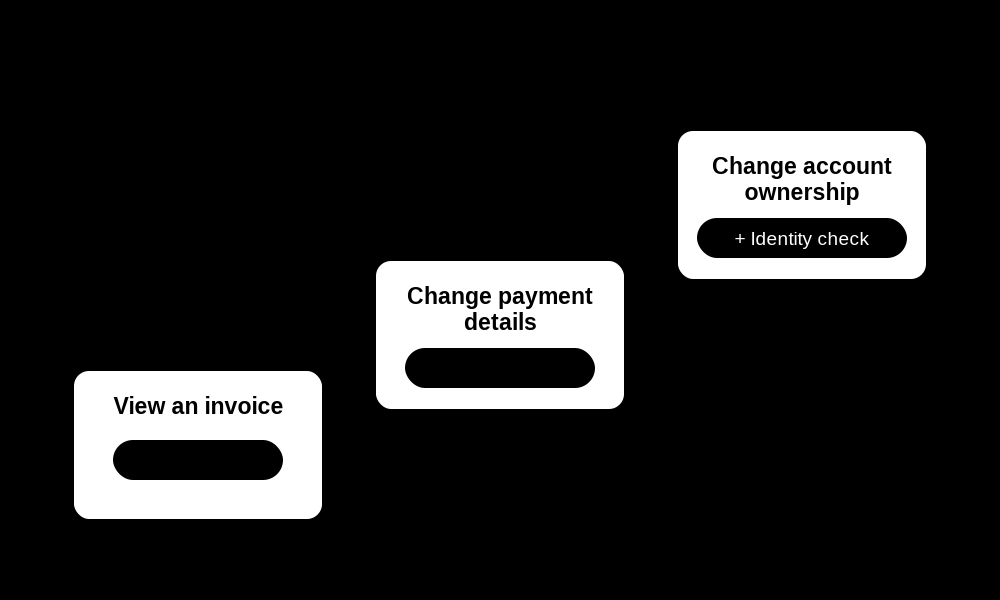
For example, viewing an invoice may require only an authenticated session, while changing account ownership or modifying payment details may require additional verification.
Building Customer Trust Through Security
Security is not just about preventing financial losses. It is also about building trust.
Customers want to know that their personal information is protected, their payment transactions are handled securely, and their accounts cannot easily be misused.
Businesses that take security seriously demonstrate professionalism and responsibility. This can strengthen customer relationships and contribute to a more reliable business reputation.
Final Thoughts
Identity verification and fraud prevention are essential components of modern business management. As digital transactions become increasingly common, businesses of every size need to take proactive steps to protect their customers, financial information, and operations.
A combination of identity verification, secure payment processing, account protection, activity monitoring, and clear security procedures can significantly reduce exposure to fraud.
At Servicejoy, we believe that managing a business should be simple, efficient, and trustworthy. Protecting business operations and customer relationships is an important part of building that experience.
Run your business with confidence. Make security part of the way you work.